Wood Fence Builds by Our Fence Company
There's a particular sort of peaceful fulfillment that features developing a timber fence. The first few messages go in, and the entire job begins to feel real. String lines break tight, the edges look square, and instantly you can picture exactly how the backyard will feel as soon as the rails and pickets are done. A wood fence isn't just a border. It's a piece of carpentry that needs to survive wind, rain, frozen ground, and the small daily turmoil of individuals and pet dogs moving with a space.
At our fence company, we've constructed every little thing from useful personal privacy fencings to the sort of rustic boundary that makes a home resemble it belongs in a storybook. Every build has its own weather condition pattern, dirt behavior, and property owner assumptions. What does not transform is the craftsmanship. Right stuff that matters is seldom glamorous. It's placement, drain, bolt option, and the choice to do it once, do it right, and leave the fencing with the capacity to age with dignity instead of falling down into gray, warped frustration.
Walking the line: what a timber fence actually needs
A timber fencing develop begins long before any type of board obtains cut. We hang out on the site because timber is honest concerning its atmosphere. If the ground is soft or soaked, the posts will move. If water sheds towards a corner, that collar will rot first. If the grade adjustments fast, the fencing has to step cleanly without resembling it's tripping.
You also need to recognize what you're attempting to accomplish, because "timber fence" can indicate wildly different points relying on the goal.
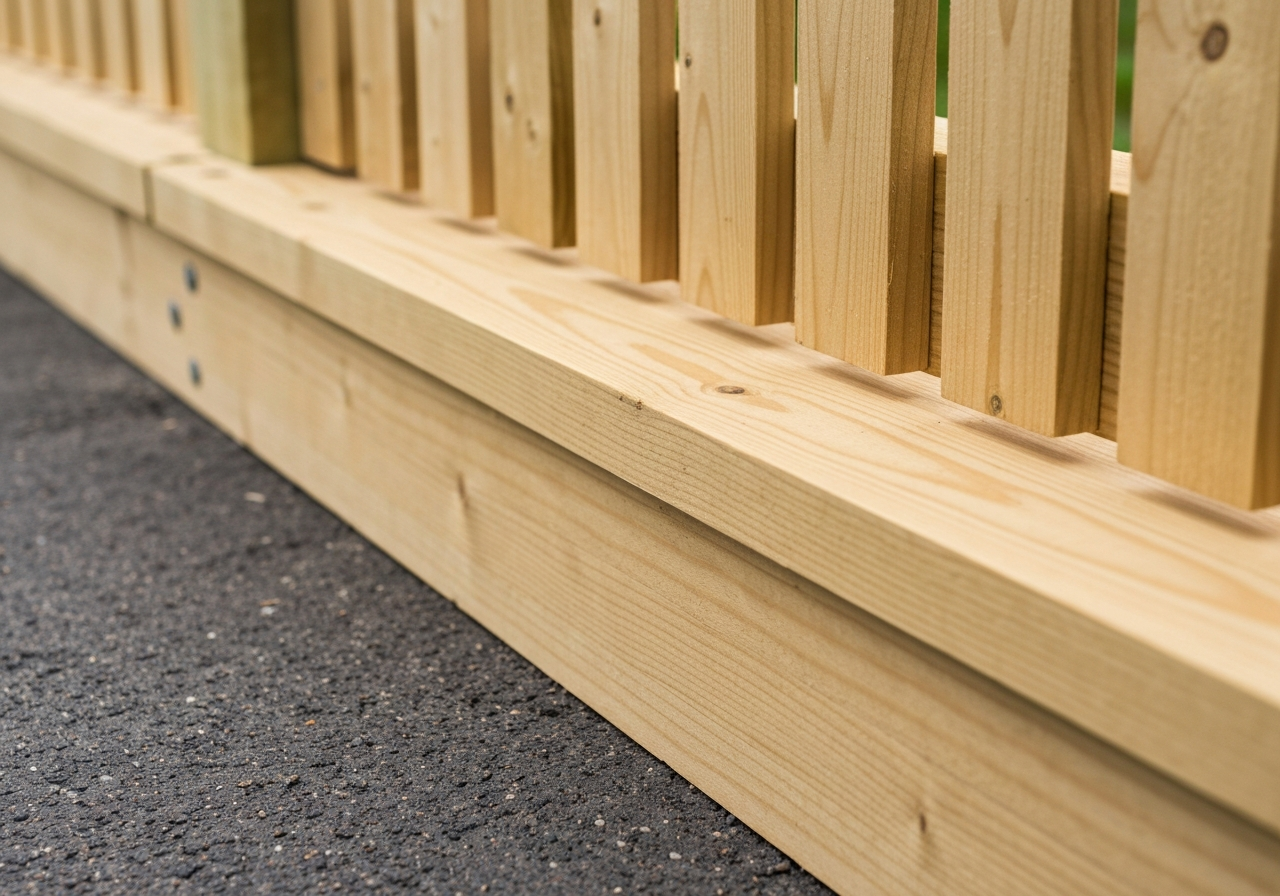
A privacy fencing needs constant panel placement, tight spacing, and boards mounted so the face remains directly. A semi-privacy style, especially with broader voids, has to handle air movement without becoming a gusty sail. A picket fencing requires crisp shadow lines and a leading rail that holds its geometry, or it will look wavy also when the boards are separately straight.
We have actually discovered to ask concerns that seem simple yet aren't. Do you want the fencing to look even more conventional or much more contemporary? Are there grow trees close-by that decrease sap or shade the boards greatly? Does eviction need to handle larger foot traffic, like a backyard path made use of everyday? Those responses form every little thing from article spacing to rail height.
Choosing wood that can take the job
Wood fences fall short in foreseeable ways: posts settle, boards mug, fasteners rust, and the reduced areas get chewed by wetness. Most of those concerns come back to wood option and exactly how the fencing is assembled.
Some tasks use pressure-treated lumber, because it's designed for outside exposure. That matters for the components of the fence that stay moist much longer, specifically where the boards meet the ground and where water gathers versus the blog posts. Other home owners like a more natural appearance and select a certain varieties. When someone desires that, we chat via the compromises rather than pretending there's a magic button that makes every timber behave the same.
An excellent wood fence construct values the reality that not all wood is equal in just how it holds shape with time. Even within the same classification, you can see distinctions in density, exactly how the boards were dried out, and just how they respond after installation. We focus on board straightness, surface area checking, and exactly how the grain behaves. Straight boards save you hours and irritation later, due to the fact that attempting to "deal with" warp after the rails are up is where good woodworking develops into pricey patchwork.
And then there's the hardware. Individuals focus on boards due to the fact that they're visible, but the fasteners are what maintain everything from gradually working loose. We use corrosion-resistant fasteners matched for exterior use. That might sound like a tiny information, but over years, it's the distinction between a fencing that holds tight and a fence that starts rattling or creating spaces you didn't plan.
Layout and posts: where most issues are born
Before we set messages, we verify the format. Fence lines are a mix of building limits, existing attributes, and useful pathing with the yard. That suggests we often take care of irregular terrain, previous fencings that were somewhat off, and corners that are "practically" right yet not quite.
Here's the part of wood secure fencing that can not be rushed: post positioning and placement. Posts establish the look of every little thing over them. If articles drift, the rails will fight you. If articles are various depths, the fence will work out unevenly. If you do not prepare for spacing, the pickets or boards won't line up like they should.
We established messages with an eye towards stability in the soil, and we take notice of just how water acts around the base. In numerous yards, water collects where you the very least want it. If the ground is sloped, it can leave one side of the post rather than receding. That develops a wetness pocket that reduces the life of the reduced sections.
A fence must not be constructed as if rain is optional. It isn't. The fencing has to have the ability to handle cycles: wet wood, freeze, thaw, sunlight drying, after that an additional storm. Timber can take those cycles, but it requires the best building so moisture doesn't stick around at the wrong spots.
A quick peace of mind checklist we use on site
When we prepare to start reducing and putting, we go through the basics in ordinary language, because it's simple to miss one information when you're scooting:
- Confirm the fencing line and corner settings versus the planned design, not simply against what "looks close."
- Verify entrance openings early so the spacing and swing clearance do not get redesigned midway.
- Check soil and drainage at article locations, particularly where water tends to pool.
- Inspect lumber for straightness and usable sizes prior to devoting to cuts.
It's not expensive. It's the distinction between starting solid and fixing issues later on when everything is already nailed in.
The rails and spacing: where the fencing ends up being "a fence"
Once the blog posts are established, the develop adjustments personality. Bed rails and boards are where the fencing stops being a line of uprights and comes to be a visual structure.
A wood fence has to line up in numerous dimensions. Straightness isn't practically "level." It has to do with regular spacing, consistent elevation, and boards installed with focus to grain alignment and how they sit against each various other. Even if the messages are excellent, you can end up with a fence that looks off if you deal with every board as identical.
We've seen how small differences compound. A space that's a little bigger on one panel seems harmless at first. Then the neighboring panel gets set up and all of a sudden the total pattern looks unequal. That's why spacing matters. It's likewise why we do not depend on uncertainty. We make use of referral marks and we measure repeatedly, due to the fact that a fence doesn't forgive "close sufficient" after the fact.
There's additionally the question of how to deal with terrain changes. If the ground inclines, you can step the panels in a clean stair pattern, or you can "ramp" the fencing elevation to comply with the incline. One strategy looks much more uniform, the various other looks extra natural. The right option depends upon just how visible the slope is, how long the run is, and what the property owner anticipates to see.
We always talk via it since it's a style decision as high as a building and construction choice. A high lawn can make one approach appearance fantastic and the other look uncomfortable. On the various other hand, if a residential property has mild grading, one consistent method can keep the fence looking tranquility and intentional.
Gates: the information homeowners discover first
Gates are commonly where wood fencings reveal their real high quality. If an entrance doesn't swing smoothly, doesn't lock cleanly, or droops after a season, people see promptly. You can have a superb fence around it, yet a bothersome entrance draws interest like a spotlight.
An entrance is a framework, which means it relies upon appropriate measurements and solid connections. Timber relocates with periods, and joints and latches requirement to be installed in a manner that endures that movement. If eviction is constructed somewhat too tight or the joints aren't straightened, it will certainly bind. If the lock doesn't catch regularly, eviction turns into a daily annoyance.
We develop gateways with an eye towards real usage. If the fencing shields a dog run, eviction may be opened up and closed frequently, with less cautious handling. If it's a yard entry, it might be hit with grass equipment or used with mass products going through. The equipment and the reinforcement choices need to show that.
And of course, gate alignment matters as high as entrance strength. If the posts around the gate aren't established with the appropriate geometry, eviction will "function" initially and afterwards start to drag as wood shifts and hardware loosens under load.
Weatherproofing that isn't simply paint and hope
A common error is assuming that discoloration or painting makes wood weatherproof. Stain helps, yet it does not change good building. A fencing with proper drainage and moisture monitoring will certainly last much longer even if you revitalize the surface later. A fencing built without that security can fall short despite pricey coatings.
We look at the fencing as a system. The lower sides splash more frequently. The areas facing prevailing wind get even more wetness. The corners could see different direct exposure than the center runs. After that there's sun. Sunlight dries boards, however it can likewise drive fracturing, especially in wood that dries also quick or isn't completed promptly.
One of the most functional options is exactly how to maintain water from sitting against the surround the top place. That may imply adjusting quality near the base, enhancing water drainage courses, or leaving tiny clearances in between the fence and landscape design so the boards can breathe. It likewise indicates being practical regarding what maintenance will certainly appear like. Some yards can go a long period of time without focus. Others are consistently wet, shaded, or revealed to wind-driven rain.
If someone wants the fencing to remain looking sharp year after year, we discuss maintenance timing. Re-coating isn't an one-time event. It's a partnership, and it depends upon where you live, just how much sunlight and rain you get, and what surface kind you pick. We attempt to set assumptions early so it doesn't become a surprise expense 2 seasons later.
The compromises of wood fence style
Wood fencings can be found in numerous types, yet they share a household similarity: they are adaptable and flexible in look, however they call for excellent setting up to stay straight.
Privacy vs. Airflow
A complete personal privacy layout blocks view and minimizes wind seepage, however it can additionally catch moisture if there isn't air movement. A semi-privacy style can aid, however it still needs cautious spacing and good board setup. We determine based upon environment and the home owner's objectives, since a fence that looks excellent in a dry area can behave in a different way where storms are frequent.
"Thick" fence lines vs. Budget-friendly builds
More material can suggest longer-lasting panels because you get stronger rails and fewer weak points. However thicker builds likewise cost even more and can boost wind tons. It's not a basic "a lot more is better" equation. We match the building and construction strength to the predicted problems and the fencing length.

Aesthetic selections that influence durability
A decorative top side can look extraordinary, however it might need added cuts and connections. Every joint is a prospective failing point if it accumulates water. We can still develop it, however we pay attention to just how the water escapes those surface areas. The objective is to make beauty deal with the physics, not deal with it.
Real-world information: the stuff you only find out by building
There belong to a timber fence construct you just discover when you get on the ground, determining and repairing, not when you're looking at photos online.
For instance, you can have straight boards and still obtain a bumpy section if your rail positioning isn't consistent. Timber will exaggerate small mistakes. Another usual surprise is that "square corners" are rarely absolutely square on the planet. Qualities have angles, existing frameworks have offsets, and previous work may not match today's layout. A fence company that constructs only to a stiff strategy without adjusting can wind up with unusual panel sizes and a coating that looks patchy.
We also think of just how the fence communicates with landscape design. If you hide groundcover right up versus the boards, wetness remains caught. If you plant as well close to the posts, roots can change the ground with time. If you place compost heavily against the fence, the reduced portion stays wet much longer. Those things aren't "fencing troubles," however they become fence troubles because they change the microclimate around the wood.
Here's another truth: yards aren't fixed. Individuals relocate sprinklers, grade modifications after remodellings, and often a yard expands right up to the fence line. We can construct the fencing to handle those changes better by making informed selections about article deepness, rail security, and coating protection.
How long does a timber fencing last?
It depends. Wood fencings can stand up for many years when developed well, ended up appropriately, and kept with affordable timing. The largest variables are environment, just how damp the fence gets, the type of wood and equipment used, and whether water is managed at the base.
In practice, we talk about expected life-spans in ranges instead of single promises, because a fence in a dry, warm area can mature really differently than a fence in a constantly wet or heavily shaded backyard. Even within the exact same region, the direct exposure can swing considerably based on incline, prevailing wind direction, and just how the property drains.
If a person wants a "collection it and neglect it" fencing, timber can be the incorrect material, or at least the wrong assumption. Wood lives, it relocates, it responds. That does not mean it's delicate. It suggests you pick timber since you accept a truthful connection with maintenance and seasonal change.
After the build: what excellent upkeep looks like
The right upkeep isn't compulsive. It's targeted. You concentrate on the parts that reveal early symptoms. If you're proactive, you can deal with problems before they end up being costly replacements.
Look for bolt problems, especially along rails and near the ground. Look for boards that begin to separate a little or twist in methods they didn't have in the past. Inspect corners, because edges tend to accumulate water and stress.
If you discolor or secure, the timing is essential. Complete that's applied too late, after the timber has already saturated repetitively, may not penetrate also and might not last as long. On the various other hand, applying a new surface at the incorrect time in the climate cycle can leave you with unequal results. We aid property owners select a sensible routine based on local conditions and the finish system used.
If you require a simple routine that does not take over your weekend breaks, this is the sort of method we advise:
- Inspect the fence seasonally, concentrating on articles, rail joints, and the bottom edges.
- Refinish when the existing layer shows indicators of failure, not on a taken care of schedule alone.
- Keep plants trimmed back so airflow and water drainage around the fencing improve.
- Address small loosened boards early so they don't end up being structural problems.
A fence that's maintained gently however regularly often ages much better than a fencing that gets overlooked for many years and then "fixed" all at once.
Common errors we avoid before they start
Wood fencings are forgiving until they aren't. Right here are the common errors we see, together with what we do differently on our builds:
Using dissimilar materials
When boards and equipment do not match, you obtain uneven aging. Different boards expand differently, and various fasteners react in different ways to dampness. Over time, that mismatch comes to be visible as bending, loosening, or early failing at one section.
Building without thinking about drainage
A fencing doesn't require to sit in dry problems, yet it does need water to move away as opposed to pooling at the base. We intend around the grade and consider exactly how rainfall most likely journeys across the property.
Skipping placement checks
Fence lines look directly from a distance, yet when you're strolling along with them, the human eye notifications little inconsistencies promptly. We maintain placement checks frequent since when a panel is installed improperly, repairing it is a lot more disruptive than measuring meticulously at the start.
Treating eviction like an afterthought
Gates lug use and stress. If eviction framework, hinge alignment, and latch placement aren't constructed to take care of activity, eviction becomes the weak link. We build gateways with the same seriousness as the fence runs.
Why homeowners call our fence company in the very first place
People work with a fence company when they want more than a weekend break task. They desire a result that stands up, looks willful, and does not need continuous patching.
Sometimes they call after seeing a fence that drooped or deformed. Often they move right into a home where the previous fence was badly constructed and they await something solid. Other times they know they want timber because they such as the structure, the heat, and the way it blends with landscape design better than several alternatives.
What we hear most often is relief. House owners are tired of guessing. They desire someone to stroll the residential or commercial property, talk with choices, and construct the fencing with real-world choices. Our work is to make those choices clear, not mysterious.
And when you see the last line of articles and rails standing straight against the skies, it's not just the carpentry that really feels great. It's the confidence. The fence is constructed to manage weather. It's constructed to remain aligned as the seasons shift. It's developed so upkeep is sensible rather than constant.
The last boards: the minute the backyard changes
When the last pickets or boards take place, the fence stops being construction and starts belonging to the home. That's when you discover the distinction between a fence that's just "mounted" and a fence that was constructed with attention.
Edges align. The leading rail looks calm rather than jagged. The shadow gaps correspond. Eviction opens up and closes without drama. You go back and the residential property really feels more ended up, extra sheltered, extra yours.
Wood fencings have a living top quality. They gray, they weather, they soften in tone. Yet if the develop is done well, that aging does not seem like decrease. It seems like a story continuing, time after time, with the structure still solid underneath.
That's what we go for with every timber fencing construct. A strong limit you can rely on, a workmanship you can see up close, and a fencing that resembles it belongs in the landscape long after installment day.