Norman, OK Landscape Design Ideas: Achieve a Low-Maintenance Yard with Leading OKC Contractors
The red dirt, wind, and heat in Norman, OK can humble even experienced gardeners. I have seen lush spring lawns turn patchy by July, and ambitious plant lists whittled down to a few survivors. The trick is not to fight the climate, but to harness it. With the right landscape design ideas, and the steady hand of seasoned landscape contractors in Oklahoma City, you can build a yard that looks good year round, sips water, and rarely begs for weekend labor.
Start with the site you have
Every successful project begins with a walk of the property. Notice where water settles after a storm, how afternoon sun hits the patio, and where the wind funnels. In Norman, clay soils are common and compaction is the rule, not the exception. I often recommend a soil test before any landscape design & install, especially if turf struggled in the past. Amending clay with expanded shale or compost, even at a modest 1 to 2 inches tilled into the top 6 inches, can drastically improve infiltration and reduce runoff.
Grades matter. A gentle 1 to 2 percent slope away from structures prevents foundation issues and allows for practical drainage features like swales or dry creek beds. I have watched homeowners spend more on irrigation than necessary because they never fixed grades, so water simply ran off the lawn. Correcting slope is a one-time cost that pays back every summer.
The drought-tolerant backbone
Plant choices separate high-maintenance yards from easy ones. You want structure that can take heat and wind, then seasonal accents that earn their keep. I default to a backbone of native and adapted species: cedar elm, bald cypress for wetter spots, yaupon holly in compact forms, and tough shrubs like dwarf yaupon, abelia, and Russian sage. For perennials, think Salvia greggii, coreopsis, rudbeckia, and blue grama. Turf, if you want it, should be purposeful, not automatic. In full sun, Bermuda handles traffic with lower water needs than fescue. For shaded zones, consider a groundcover matrix rather than forcing turf.
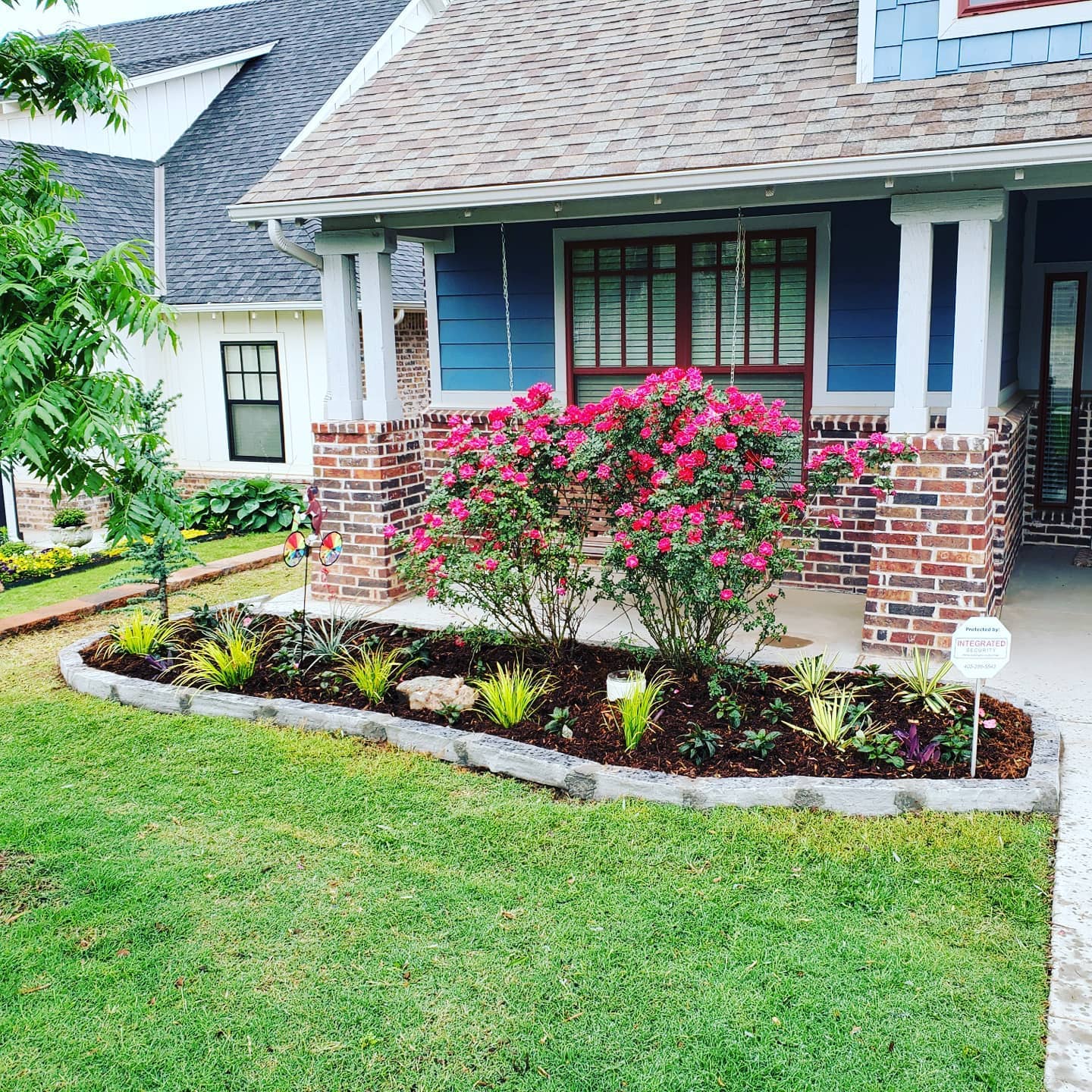
Gravel mulch and expanded shale can warm soils, so pair them with plants that enjoy heat. Where roots appreciate cooler conditions, use shredded hardwood mulch at 2 to 3 inches and refresh annually. Skip rock next to thin-leaved perennials unless you are aiming for a true xeric palette.
Water only where it counts
In central Oklahoma, irrigation is often the budget wild card. Smart controllers and drip make a bigger difference than most people expect. Drip delivers water at the root zone, minimizes evaporation, and reduces weed pressure between plants. I like to run a single drip zone for shrubs and perennials, with matched-precipitation nozzles only where turf remains. Combine this with a rain sensor or a soil moisture sensor to prevent pointless cycles after a storm.
A practical example: a 600-square-foot planting bed using drip at 0.6 gallons per hour emitters, spaced 18 inches, can often run 45 to 60 minutes twice a week at peak summer, then taper in spring and fall. That is a manageable schedule even during watering restrictions. Leading landscaping companies in Oklahoma City will also audit spray coverage, trim wasted head-to-head overlaps, and move nozzles off sidewalks that heat-soak water into steam.
Hardscape that lightens the load
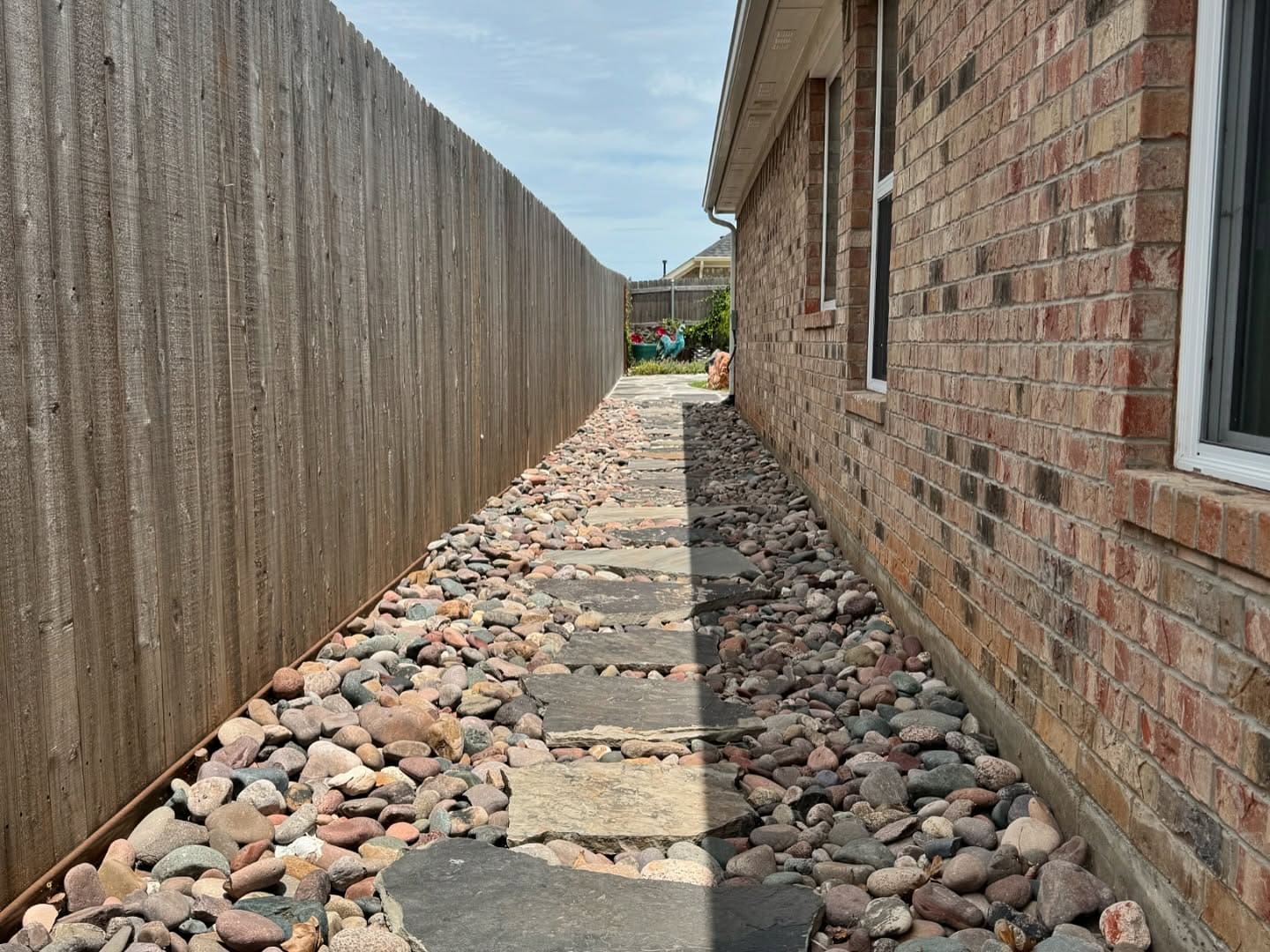
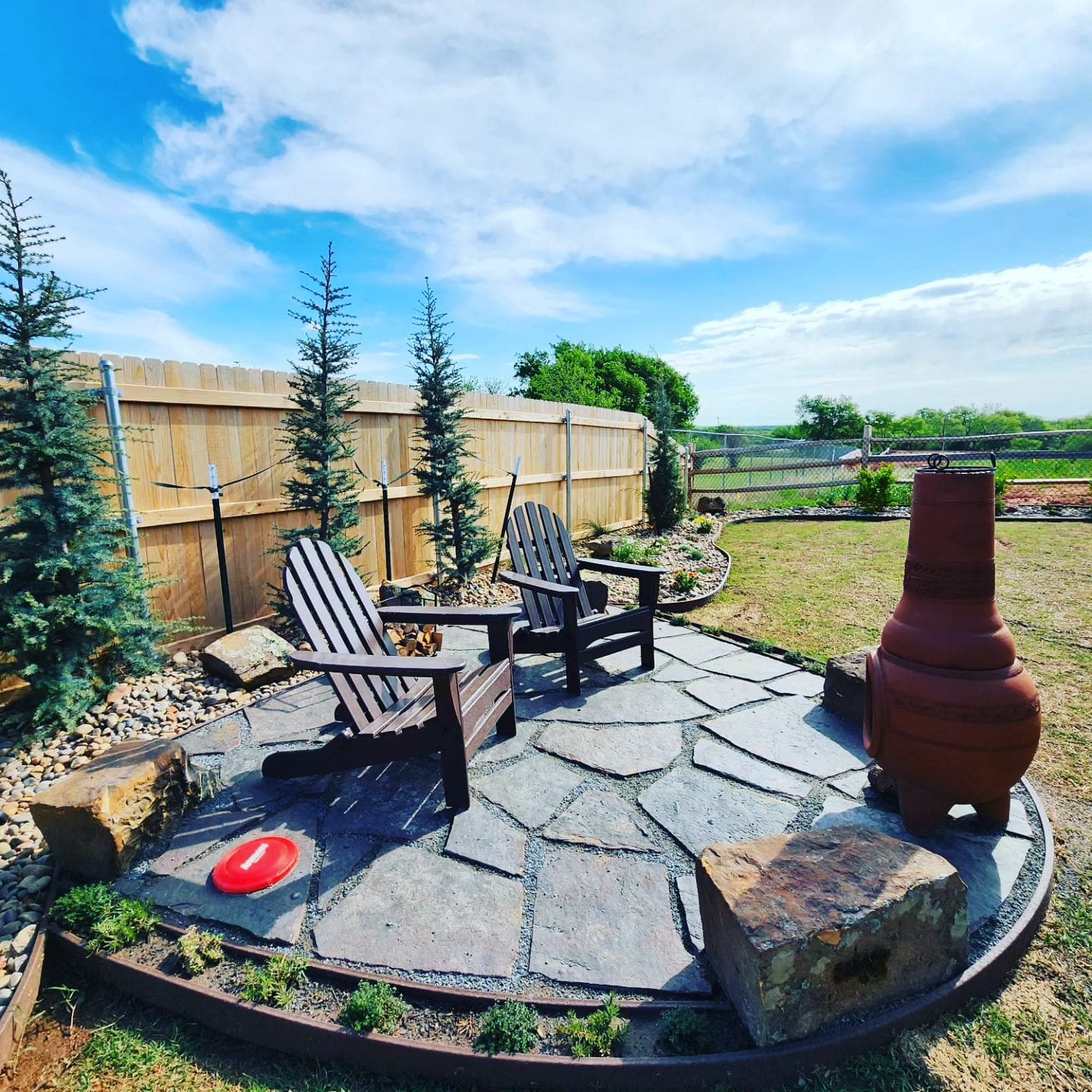
Pavers, decomposed granite, and steel edging can do more for maintenance than one more flower bed. Expand the patio by a few feet to reduce mow strips that demand hand edging. Use steel or concrete curbing to define planting areas and keep mulch out of turf. A decomposed granite path with stabilized binder gives a firm, permeable surface that handles thunderstorm runoff better than plain pea gravel.
I often advocate for a dry creek bed where downspouts converge. Use native river rock in varied sizes, add flagstone step points, and plant sedges at the edges. Function meets form, and you gain a visual spine that looks intentional, not like a drainage repair.
Seasonal strategy that works with Oklahoma’s rhythms
Design for extremes, then enjoy the ordinary days. Spring bursts are easy to achieve, but summer staying power is what counts. Place sun-tough perennials where heat reflects off masonry, and keep fussy bloomers in partial shade near a hose bib or microdrip line. Wind breaks matter; even a short run of ornamental grass or a low metal screen can shield tender foliage in winter.
For fall interest, switch from petal drama to texture and seed heads. Little bluestem, switchgrass, and black-eyed Susan carry through December with color and movement. Prune ornamental grasses in late winter before new growth, not in fall, to protect crowns from freeze-thaw cycles.
Where OKC contractors add real value
Experienced landscape contractors in Oklahoma City know the quirks of municipal water pressure, clay subgrades, and freeze depth for footings. They also spot pitfalls early: irrigation sleeves missing under driveways, poorly compacted base under pavers, or plant palettes that look good in catalogs but fail in alkaline soils. When interviewing landscaping companies in Oklahoma City, ask to unique landscape design concepts see a project that is at least two summers old. Survivorship tells you more than a day-one photo ever will.
Here is a quick, practical checklist to keep estimates honest:
- Ask for gpm and psi readings at the hose bib before irrigation design.
- Confirm soil amendment rates by volume, not “as needed” language.
- Specify plant sizes and cultivars in writing, including container size.
- Require a controller schedule at handoff and a 30-day tune-up visit.
- Request a drainage plan sketch with elevations, not verbal assurances.
A sample low-maintenance layout
Picture a 7,500-square-foot lot in Norman with a west-facing backyard. Keep turf to 1,800 square feet near a small play area, edged with steel for clean lines. Build a 12 by 20 foot paver patio with a pergola for late-day shade. Carve two large planting beds along the fence with a mix of yaupon holly, dwarf abelia, Russian sage, and seasonal color pockets of Salvia greggii and lantana. Run drip through the beds and use MP rotators for the turf. Add a dry creek from the rear downspout to a shallow swale, then finish paths in stabilized decomposed granite. This approach reduces mowing to under 30 minutes, trims water use by a third compared to all-turf yards, and looks finished from March to December.
Low maintenance in Norman is not about doing less, it is about doing the right things once. With thoughtful landscape design ideas and a disciplined landscape design & install, guided by the best contractors in OKC, your yard can stand up to the heat, shrug off wind, and still greet you with color at the end of a long week.