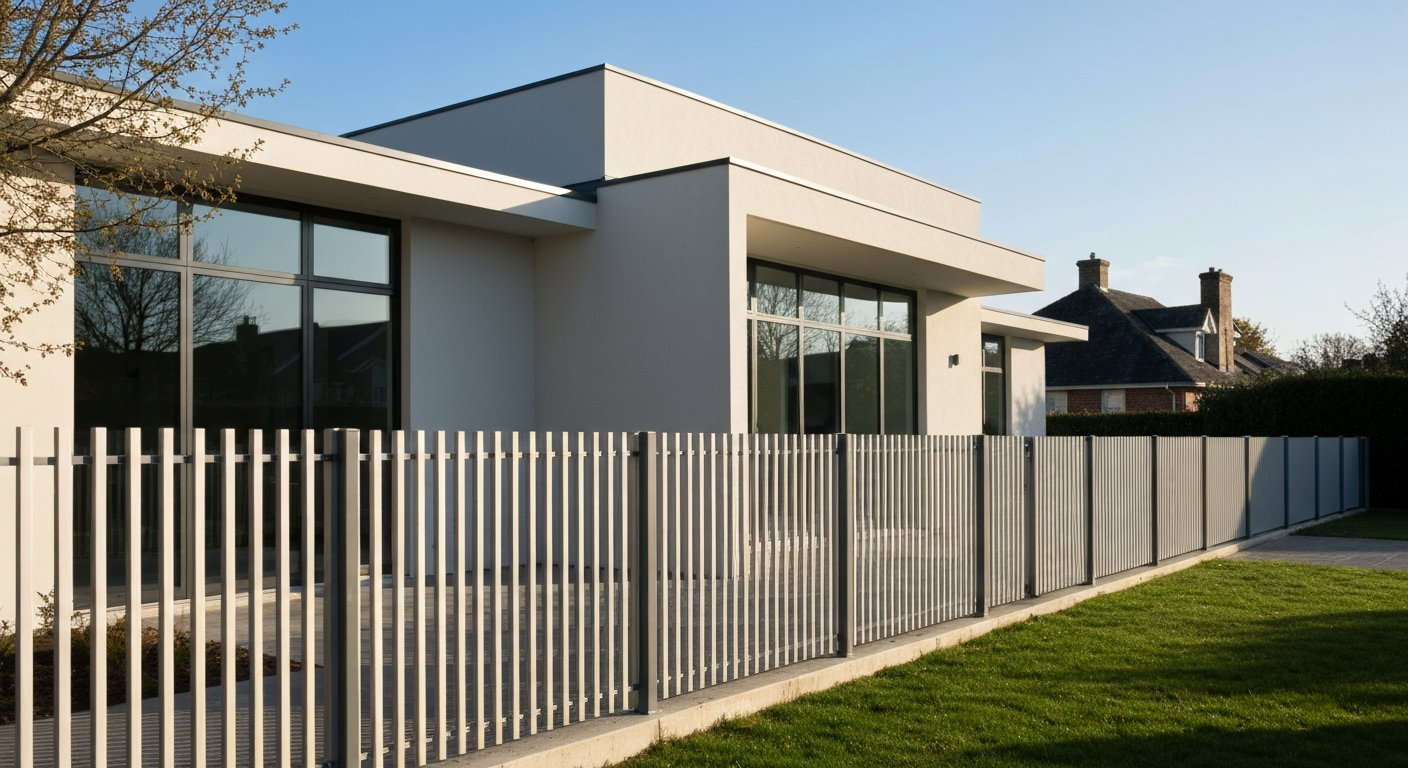
Fencing Contractor Tips for Backyards With Sloped Lots
A sloped yard transforms a "straightforward fencing" right into a task that demands preparation, patience, and a little humbleness. One community whole lot can resemble a gentle downhill quality from the porch, then you drop into the backyard and realize the ground is climbing or dropping by inches per foot. That's when fencing lines start to combat you. Posts intend to lean, rails intend to twist, and gateways stop swinging like they used to.
If you hire fencing contractors, or you're talking with a fence company about range, the inquiries you ask early determine whether you obtain a right, solid fence or a jumble of compromises. I've developed and supervised sufficient fencing installs on uneven property lines to recognize the difficult truth: incline isn't the adversary. Poor website decisions are.
Below are the functional suggestions I utilize as a fencing contractor when the yard runs downhill, up a hillside, or does both within the very same run.
Start with the incline truth, not the pretty plan
Most fence designs start with a straight line on paper. On level land, that functions. On a sloped whole lot, straight lines in strategy check out do not translate into level boards in the real world. The fence has 2 work that typically conflict with each other:
Before you select a style, walk the perimeter and really watch the grade. Bring a tape measure and keep in mind the altitude change where the fencing will certainly run. Even a standard "regarding how much drop over the length" price quote changes the discussion fast, due to the fact that it establishes whether you can make use of step-style building and construction, tilted panels, or a tapered blog post establishing approach.
If the yard goes down sharply, you also need to determine whether the fence is meant to be simply visual privacy, a wind break, a pet barrier, or a combination. The more the fencing should work as a barrier, the less space you have for ornamental unevenness.
A solid fencing contractor will usually inquire about drainage too. Water does not appreciate the neatness of a fencing line. On sloped lots, drainage can collect near the bottom edge, laundry around article holes, and undermine the dirt that holds your posts.
Choose the appropriate fencing technique: action, incline, or custom
There are 3 typical methods fences manage incline, and each one has trade-offs.
Stepped fences use a regular top rail or fencing height in each "step," with the next section stepping up or down to match the quality. Visually, it's often the cleanest look, especially with pickets and lots of kinds of panel secure fencing. Functionally, it maintains the boards mainly lined up with each other within a section, which aids with gate operation.
Sloped fences attempt to keep the fence line "continuous" by angling rails and getting the account with the ground. This can look all-natural on some landscapes, yet it comes to be tricky when you need solid uniformity for latching, clean positionings, or uniform spacing. Some house owners like it, however you pay much more in cautious fabrication and post settings.
Custom solutions show up when the incline is irregular, the lawn has maintaining walls, or the lot's elevation changes twice over a brief range. This is where you may see conical messages, custom-made rail angles, or areas that step partly, then transition.
When you talk with a fence company, do not approve a single-word response like "we'll just do it." Ask exactly how they prepare to keep the fencing top lined up and the panels consistent. The best professionals will explain the building technique clearly, not simply guarantee results.
Confirm the home line and your permit requirements
On a sloped lot, it's easy for assumptions to become costly rework. Survey risks can be hard to spot in irregular backyards, and next-door neighbors often determine from various points due to the fact that the quality hides corners.
Before any kind of trenching or blog post digging, make sure the boundary is verified. If you already have a survey, bring it to the site conference. If not, ask the fencing contractors you're considering what they do when property pens are missing or vague. A professional fence company deals with boundary confirmation as part of the task, not an optional favor.
Also check regional permit guidelines. Some locations permit fences approximately a certain height, others require setbacks, and some have slope-related factors to consider for drain or grading. Allow restraints could not be about slope straight, but slope affects how you install posts, whether you're interrupting more ground, and what your last fence account looks like.
Plan for article deepness and security in real soil conditions
A fence on an incline still needs blog posts that stand up to side movement. The largest mistake I see in sloped backyards is superficial message setting because the bottom of the quality "looks great" when you initially dig. Soil can change quick with altitude and drainage. The top of a hillside can be drier and a lot more small, while the lower portion can be looser or wetter, occasionally with various compaction and natural content.
When articles are put, ask your professional about article deepness and just how they take care of irregularity. A strong fencing contractor should discuss how they'll make up various soil layers along the run. In practice, they could need deeper openings at certain factors or make use of concrete where soil is unpredictable. The precise numbers vary by region and soil, but the frame of mind is consistent: the plan must adapt to the ground, not require the ground to accept the plan.
One field observation I depend on: lower-yard messages commonly need even more interest. Overflow and saturation can soften the dirt around those holes. If water is moving along the fencing line, take into consideration exactly how the fence interacts with that said movement. If you do not, you can end up with blog posts that slowly loosen and rails that begin to sag.
Use string lines and measurements that match the terrain
A great deal of fencing issues begin before the initial article opening. If format marks are wrong, incline will certainly multiply the mistake. On flat ground, you could conceal a tiny inequality. On a slope, a small angle becomes a big visual shift over a long run.
A far better approach is to set a format technique that follows the grade. Specialists often use string lines linked into consistent reference points. The goal is to confirm:
- the fence line is directly along the building boundary
- the message areas match the spacing requirement
- the top profile matches your picked building and construction approach (steps or incline)
When you're evaluating a quote, ask how they'll lay out messages on a sloped yard. If they can't define their process, you should take that as a warning sign. A fence company that does this consistently will chat like they have actually done it in the past, because they have.
Talk regarding rails, picket spacing, and how "level" will certainly be handled
Homeowners frequently say, "I desire it degree." On incline, "degree" and "comply with the ground" can indicate different things. Rails can be mounted to be degree within their action areas, or they can be mounted at a constant angle. Pickets can preserve uniform spacing but still look various relying on exactly how rails and assistance blog posts are set.
Here's the key concern to ask: "Will the fence top be degree within areas, or will the fencing adhere to the incline continually?" Then ask just how that impacts gaps at the bottom.
In several sloped backyards, a stepped top rail and regular spacing offers the most foreseeable appearance. It also assists with gates. Gates rely on positioning. If eviction structure sits at a slight twist since the blog posts were set without an account approach, you'll battle it for life. A competent service provider builds the gate after the fence line is established and the blog post altitudes are finalized.
Don't ignore drain and dirt movement
Sloped great deals are not just "slanted." They experience movement. Freeze-thaw cycles can push and move soil. Saturated ground can clear up. Even without frost, soil can deteriorate around article holes if overflow flows toward the fence line.
If the yard has visible disintegration, standing water after rainfall, or soft ground near the bottom of the incline, bring that up. A professional fencing contractor will not treat it as a shock later. They'll suggest a plan that might involve improved post-hole preparation, appropriate concrete positioning, or sometimes adjustments to the fencing positioning to avoid the most awful drainage channel.
Also pay attention to downspouts and irrigation. A downspout discharging towards the fence can regularly damp the very same area. That's a straight path to loosening blog posts. Sometimes the very best "fencing fix" is not the fence at all, it's transferring water.
Concrete, no concrete, or something in between
This is where conversations can obtain warmed. Some clients desire zero concrete, choosing less expensive or "more natural" settings. Others want optimal strength, which typically implies concrete around articles. On a sloped lot, the dirt condition and water habits matter more than preference.
In unstable or saturated dirt, concrete can support blog posts and reduce the threat of washout. But concrete can likewise trap water in certain conditions, and improper installation can produce various other issues, like water pooling around the base. The right response relies on how the contractor prepares holes, uses gravel or drain where suitable, and makes sure the blog post is set correctly.
The practical idea for property owners is to request the reasoning behind the technique. A fencing contractor that recognizes slope will explain why the picked setup method makes sense for the soil and drain pattern at that details run of fence.
Gate placement is a slope decision, not an afterthought
An entrance on a sloped yard can behave like a diva. Even if the fence panels look terrific, a gateway can sag, massage, or fall short to latch if the joint side blog posts are not aligned to the final entrance framework plane.
When slope is involved, one of the most reliable path is to treat gate setup as a controlled construction action. That indicates:
- confirming the gate opening size and where eviction will certainly "sit" relative to grade
- aligning joint messages so the gate frame can be square without compeling hardware
- checking latch height and swing clearance based on real last elevations
If your fence plan consists of entrances, ask whether the contractor sets the posts first, after that actions and produces eviction, or if eviction is standard and set up early. Either can work, yet the best outcomes normally originate from building the gate after the fencing line is properly profiled.
Materials issue, specifically at the end of the fence
Wood, plastic, aluminum, and composite fence each react to incline differently. On a sloped whole lot, the lower side often experiences the most tension from water, particles, and unequal ground contact.
With wood, wetness and contact with damp soil can drive rot. Even if the fence is above ground, sprinkle and runoff can get to the reduced boards and rails. A professional needs to think about exactly how to preserve ample clearance and just how the lower spacing will evaluate steps.
With vinyl, a continuous run can look spick-and-span on incline, however panel alignment and rail angles still matter. A tipped account may reduce anxiety and maintain sections consistent.
With aluminum, you frequently obtain much more stable long-lasting positioning, however you still require accurate message setup and correct rail links. Light weight aluminum looks directly when it's constructed straight, and it shows every error quicker than some other materials.
If you're assessing a quote, ask what modifications they'll make to material installation on slope. A fence company that on a regular basis sets up on sloped yards will know which details tend to show up later on as problems.
Get the quote line items that really safeguard you
Sloped lots produce added labor, extra design time, and sometimes added materials as a result of cutting and manufacture. The quote must reflect that reality as opposed to bury it in unclear line items.
Look for quality on:
- the fence elevation and just how it will be preserved across grade
- how several posts, and where they will be established about the slope profile
- the installation method for posts, rails, and pickets or panels
- whether entrance hardware and alignment are consisted of and how it will certainly be readjusted if grade varies
A vibrant, truthful service provider will certainly tell you where the quote is solid and where it depends on site problems exposed after design. That's not an uncertainty. It's responsible estimating.
A brief list for homeowners before the service provider digs
You can accelerate the procedure and avoid misunderstandings if you show up prepared. Below's a limited collection of inquiries I recommend when you're speaking to fencing contractors concerning a sloped lot.
If the fencing contractor can not address these clearly, that does not automatically suggest they're wrong. It means you might be the one taking in the finding out contour, which can set you back more than a greater bid.
Expect more changes, but maintain them controlled
On a sloped yard, you will likely have some on-site modifications. That's typical. What matters is that the adjustments stay controlled and documented.
An excellent fence company will certainly walk you via the initial section. They'll demonstrate how the picked method looks at the slope extremes, not just between. After that they'll reproduce that technique along the entire line. When you see that pattern, you understand you're obtaining consistent craftsmanship.
If instead you hear "we'll figure it out as we go," ask what "figuring it out" suggests for your final look and equipment performance. When incline is included, improvisation can turn into visible waves, inconsistent spacing, and a gateway that never ever fairly matches.
Common sloped-lot mistakes, and how to prevent them
Sloped yards invite predictable errors. You can detect them early if you recognize what to look for.
Sometimes contractors reduced corners by using a single rail angle all over without taking into consideration just how each article should align. The result is a fence that looks fine from one angle and turned when watched from another. Other times, articles are set based upon approximate dimensions, and the incline collects error over long runs.
Another typical failure factor is overlooking erosion and water drainage patterns. If water streams under or along the fence line, blog posts can loosen and fence sections start to droop. That's not a product trouble, it's a site administration problem.
Finally, some tasks fail due to the fact that the house owner expects "level" without trade-off. If you want an uniform top line on high grade, you require a stepped system or personalized framing. Or else the fencing needs to comply with slope, and the bottom spacing will certainly vary.
An instance from a genuine type of yard
I when functioned a backyard where the fence line left the side residential or commercial property, dropping regarding a foot over approximately 20 feet. The property owner enjoyed the concept of a clean, contemporary leading line, but the yard had a wet lower side after rain. We took into consideration a continuous sloped leading rail, however we knew the lock and placement on the gate would be sensitive to tiny dimension errors.
We made use of a tipped leading strategy, with regular panel spacing within each area. The vital choice was establishing the hinge-side gate articles after the message altitudes were validated, after that constructing the gate framework so it matched the final account. The fencing looked crisp from the road, and the gate closed efficiently. The lower spacing varied normally with quality, but it had not been arbitrary, and it really did not create awkward huge spaces at the corners.
That project enhanced a guideline I still make use of: select the technique that shields equipment efficiency. The fence panels are part of the tale, however gates are where "practically appropriate" comes to be "right now I'm calling you once more."
How to talk with your fencing contractors concerning trade-offs
Bold tasks require truthful trade-offs. The "best" looking fencing may cost even more due to the fact that it requires extra mindful layout and even more manufacture. The "most affordable" fencing could install quick however can battle with lasting placement or gateway operation.
When going over a sloped-lot fence, usage language that compels clearness. Instead of asking, "What's the difference?" ask:
- "Which alternative will maintain the gate square in time?"
- "What will the last leading profile look like at the steepest component?"
- "Where do you expect the largest material cuts, and exactly how will that affect spacing?"
A specialist that recognizes their craft will respond with concrete information, not obscure reassurance.
Making the task really feel uncomplicated, even when it is n'thtmlplcehlder 210end.
A sloped backyard can be intimidating since it resembles it must be tougher than it is. The difficult component isn't the slope itself, it's making the right building choices early, with accurate design and a reasonable approach for how the fence will adhere to grade.
If you're employing fencing contractors or comparing a fencing company proposal, concentrate on the procedure: how they determine, just how they establish posts in variable soil, and how they plan for gateways and water drainage. Those are the components you can not phony with much better advertising and marketing or nicer samples.
When those decisions are audio, even a difficult incline ends up generating a fence line that looks willful. It withstands weather. It keeps its positioning. And most notably, it does its work without constant changes that use you out faster than the climb down your backyard steps.